
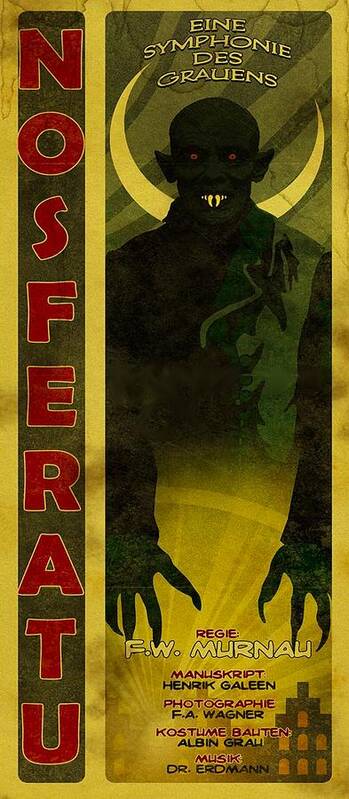
Alan and Paul sink their teeth into 1922’s “Nosferatu” as they continue the journey through German Expressionist film.
As with its German Expressionist siblings, “The Cabinet of Dr. Caligari” and “Metropolis,” “Nosferatu” has influenced subsequent horror and science fiction films, including
the post-apocalyptic scavengers in “I Am Legend,” the ravaging blood-suckers in Guillermo del Toro’s “Blade 2” and TV series “The Strain,” the Pale Man in del Toro’s “Pan’s Labyrinth,” and the gliding, grinning Gentlemen in “Hush,” the spookiest episode of “Buffy the Vampire Slayer.”1
The list of characters influenced by the design of Count Orlok also includes Petyr from the film “What We Do in the Shadows,” Baron Afanas from the TV show of the same name, Kurt Barlow from the 1979 version of “Salem’s Lot”—and who can forget the Vorvon from the old “Buck Rogers” TV series?
But it isn’t just the film’s influence on later cinema that prompted us to cover it. Stories of vampires, like all folklore, were an attempt by people to make sense of phenomena they didn’t understand—almost an allegory like the “Star Trek:” episode “Let That Be Your Last Battlefield” (among so many others).

Share your thoughts!